
10 Years of Edible Landscaping: Reflections, Lessons & Gardens That Shaped Us
2024 marked ten years since Edible Landscapes Design was incorporated.
That sentence feels both simple and surprisingly weighty.
Over the past decade, we’ve had the privilege of working with hundreds of clients locally, and thousands more through workshops, talks, and educational projects around the world. What began as a quiet curiosity about food, land, and systems has grown into a body of work shaped by many hands, many sites, and many conversations.
This milestone felt like the right moment to pause and reflect. Not to catalogue everything we’ve done, but to notice what the work itself has taught us.
What follows is not a highlight reel. It’s a distillation.
Below are ten projects, each paired with a single takeaway that continues to guide how we design, build, and support food gardens today. Narrowing this list was not easy. If your project isn’t included here, please know this is not a ranking. It’s simply a cross-section of lessons that have stayed with us and continue to inform our decisions.
Before diving in, one small delight.

We recently mapped past clients and students, and seeing pins scattered across the globe was quietly astonishing. What once felt like a long-held dream is now something tangible, made possible entirely by the people who invited us into their lives and landscapes.
If you spot a pin near your home, know that we remember the work there.
And now, onto the list.

Edible Forest Labyrinth
“Intention shapes experience”
One of our earliest large-scale projects, we stewarded and cared for this edible forest labyrinth for nearly a decade. It taught us that gardens are not only productive systems. They can also be intentional environments that invite reflection, slowness, and perspective.
When a garden is designed with care and purpose, it becomes a pathway not just through space, but through attention itself. This insight continues to shape how we think about movement, sequence, and experience in the landscapes we design.

Wheelchair Accessible Edible Landscape
“Access changes everything”
This was our first fully wheelchair-accessible food garden. During the final walkthrough, our client paused, looked out across the water, and said quietly,
“I’ve never been to this part of my yard before.”
That moment reshaped our understanding of design. Accessibility is not an add-on. It expands what becomes possible.
Since then, we’ve carried a deeper commitment to designing food gardens that invite more people into relationship with their land, regardless of mobility, age, or physical capacity.

Curvy Ferrocement Raised Beds
“Form can unlock function”
Most raised beds are built from straight lines. Ferrocement raised beds allow us to explore curves, ergonomics, and flow in ways that changed how the space felt and how people moved through it.
The takeaway here was not just about materials. Thoughtful form can make small spaces feel generous, intuitive, and alive. This lesson continues to inform how we approach scale, reach, and comfort in everyday gardens.

Edible Rooftop Children’s Garden
“Not everyone has access to soil”
This project brought food, pollinators, and play to an urban rooftop. While we learned a great deal about wind-tolerant plants and container systems, the deeper lesson was about inequity of access.
Many children grow up without regular contact with gardens or wild spaces. Bringing food gardens into overlooked urban places remains one of the most meaningful expressions of this work.

Shade-Loving Edible Forest Garden & Stonework
“Constraints create character”
A steep, shady slope with access challenges became a layered forest garden supported by stonework, shade-loving perennials, and careful water management.
This project reinforced something we now return to often. The more complex the site, the more unique and resilient the result can become, when design listens closely and responds patiently.

Stormwater Food Forest/Raingarden
“Water is neither good nor bad. It is only managed or unmanaged”
This garden began as a flooding problem. Street runoff was entering a basement. The solution became a drought-tolerant, deer-aware rain garden that now handles water gently and productively.
The lesson was simple and enduring. When water is treated as a resource rather than a threat, landscapes become calmer, safer, and more generous.

Furniture for Feasting
“Gardens and living spaces don’t have to compete”
These wicking-bed benches function as both seating and perennial food production. Later relocated to frame an outdoor living room, they reminded us that food gardens do not need to be separate from daily life.
When food, rest, and gathering overlap, gardens become easier to care for and more likely to be used.
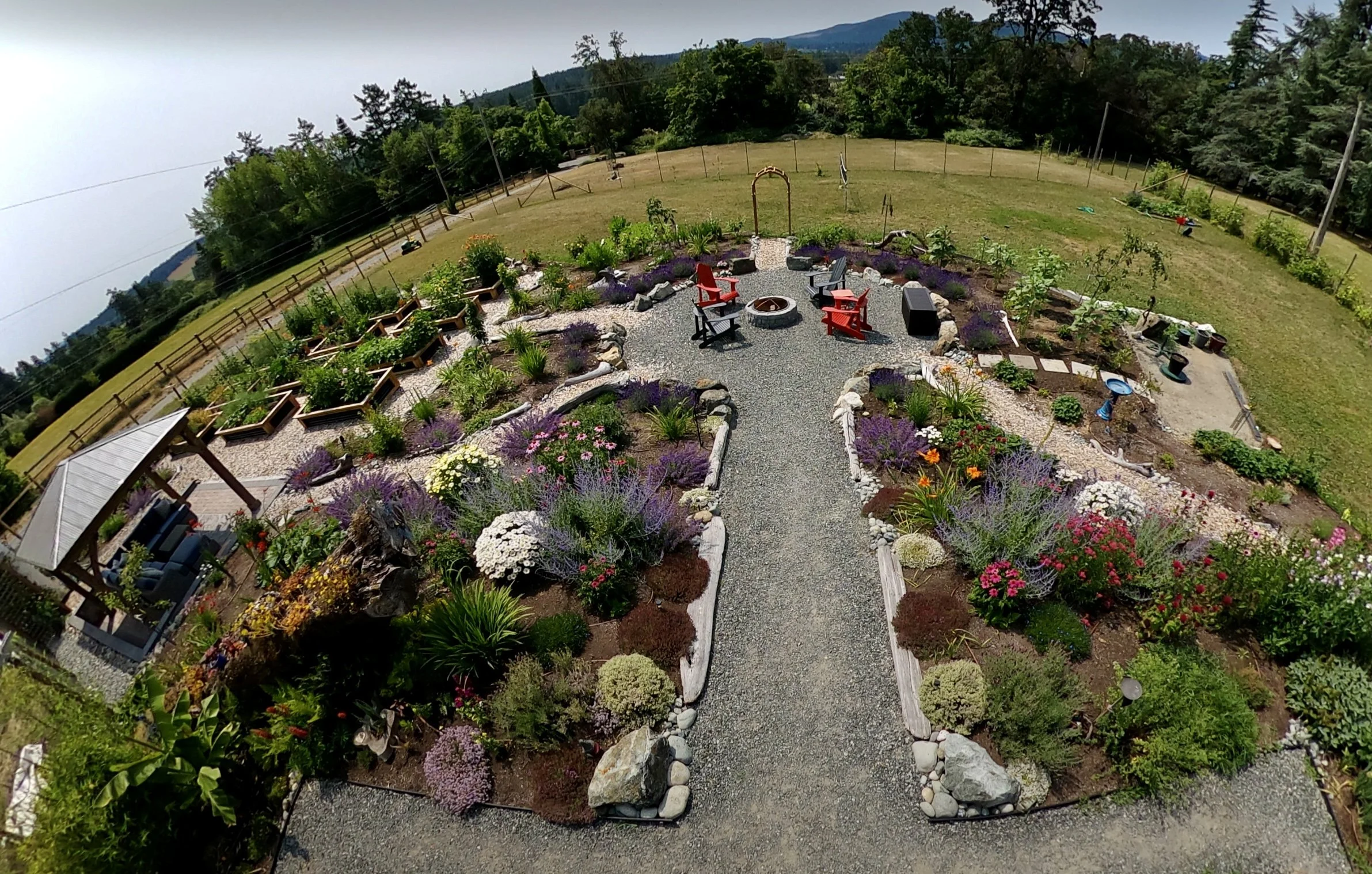
A Garden for Many Generations
“Gardens hold memory”
This garden was shaped with a long view in mind.
The goal was not to create a finished product, but a place that could grow and adapt alongside a family over time. It needed to welcome children, grandchildren, friends, and extended community, while remaining flexible as needs and roles changed.
The result was a landscape that invited participation rather than perfection. There was space to gather, space to teach, and space to tend without pressure. Over time, the garden became part of how the family relates to food, seasons, and one another.
This project reinforced something we return to often. A well-designed food garden is not just a system for production. It is a container for shared experience. One garden can quietly serve many lives.
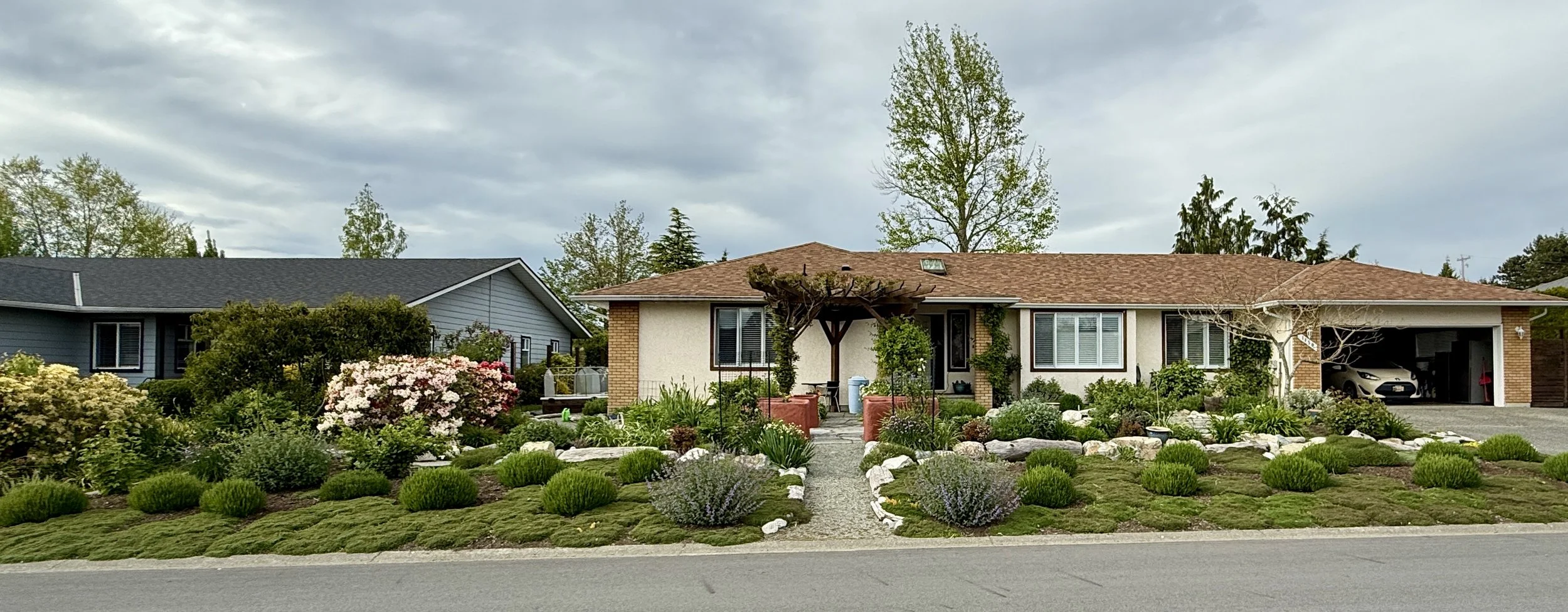
Front Yard Foodscape For Aging in Place
“Clarity creates steadiness”
This project began with a clear awareness of time.
The homeowner was thinking carefully about how she wanted to live in the years ahead. She wanted a garden that would remain supportive rather than demanding, visible rather than hidden, and nourishing without becoming another responsibility to manage.
Design decisions were guided by ease of access, realistic maintenance, and plants that offer return without constant intervention. What emerged was not only a functional foodscape, but a social one. Neighbours slowed down. Conversations started. The garden quietly reconnected the home to the street.
The lesson here was simple and lasting. When a garden is designed around real transitions, it can provide steadiness rather than uncertainty. Food becomes a bridge. The landscape becomes a companion rather than a task.

Food Forest Farm & Outdoor Living Room
“Belonging changes how land is used”
This was never intended to be a conventional landscape project.
The clients were asking larger questions about stewardship, resilience, and how they wanted to live with their land. They wanted to understand the systems they were building and to be actively involved in shaping them.
The scale of the site required patience, trust, and collaboration. Earthworks, water harvesting, and food forest establishment unfolded through shared decision-making and hands-on participation. What emerged was not just a productive landscape, but a deepened sense of relationship with the land itself.
The insight here was humbling. When people feel authorship over their landscape, they care for it differently. Collaboration does not only make ambitious projects possible. It changes the relationship entirely.
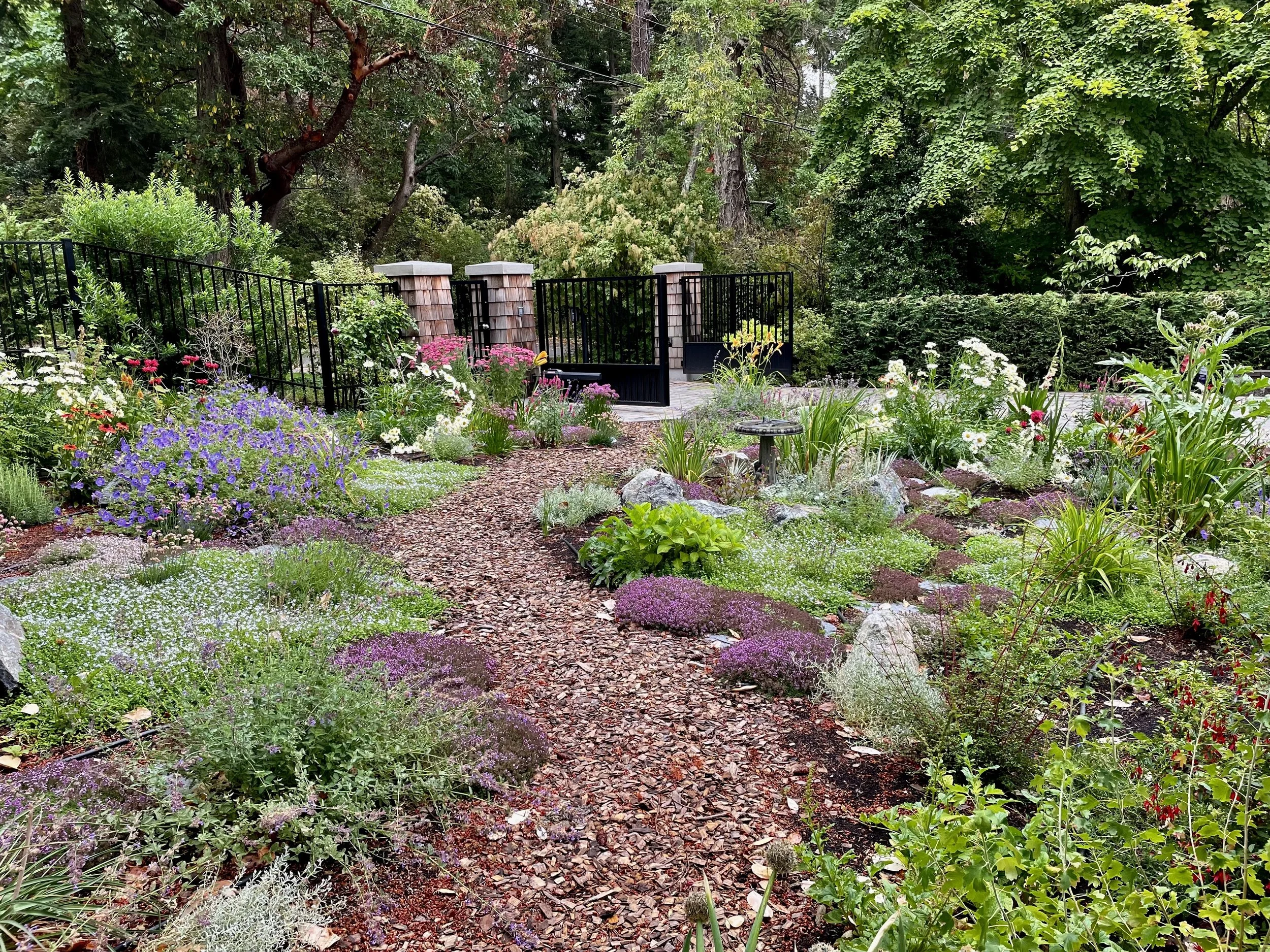
Flowering Front Yard
“Beauty invites participation”
This front yard was once a conventional lawn. It was something you passed by without noticing.
The goal was not to make a statement, but to replace that absence with something living. The garden was designed to feel open to the street and easy to take in at a glance. Flowering plants carry much of the presence, with food and medicinal plants woven in quietly. Native species anchor the planting, while familiar flowers and berries make it feel approachable.
What changed was not just the planting, but the way the space is used. People slow down as they walk past. Neighbours pause. Pollinators move through in visible numbers. There is simply more life here now.
The lesson stayed with us. When beauty leads, participation follows. A front yard does not need explanation or instruction to be engaging. Sometimes it only needs to be worth lingering in.
Looking Ahead
Ten years in, our work feels quieter, clearer, and more grounded than when we began.
We are less interested in doing everything, and more interested in doing the right things well. Helping people gain clarity. Designing gardens that mature gracefully. Building systems that support real lives over time.
If you’re curious about what your land could become, or feel unsure where to begin, you’re welcome to reach out.
You don’t need a plan.
A conversation is enough.
To everyone who has trusted us, learned with us, built alongside us, or followed the work quietly from afar, thank you. This practice exists because of you.
Here’s to gardens that grow better over time.
With gratitude,
Joshua Clae Wagler
Founder and Lead Designer
Edible Landscapes Design Ltd
