
Preparing for Abundance: Why Next Year’s Garden Begins This Fall
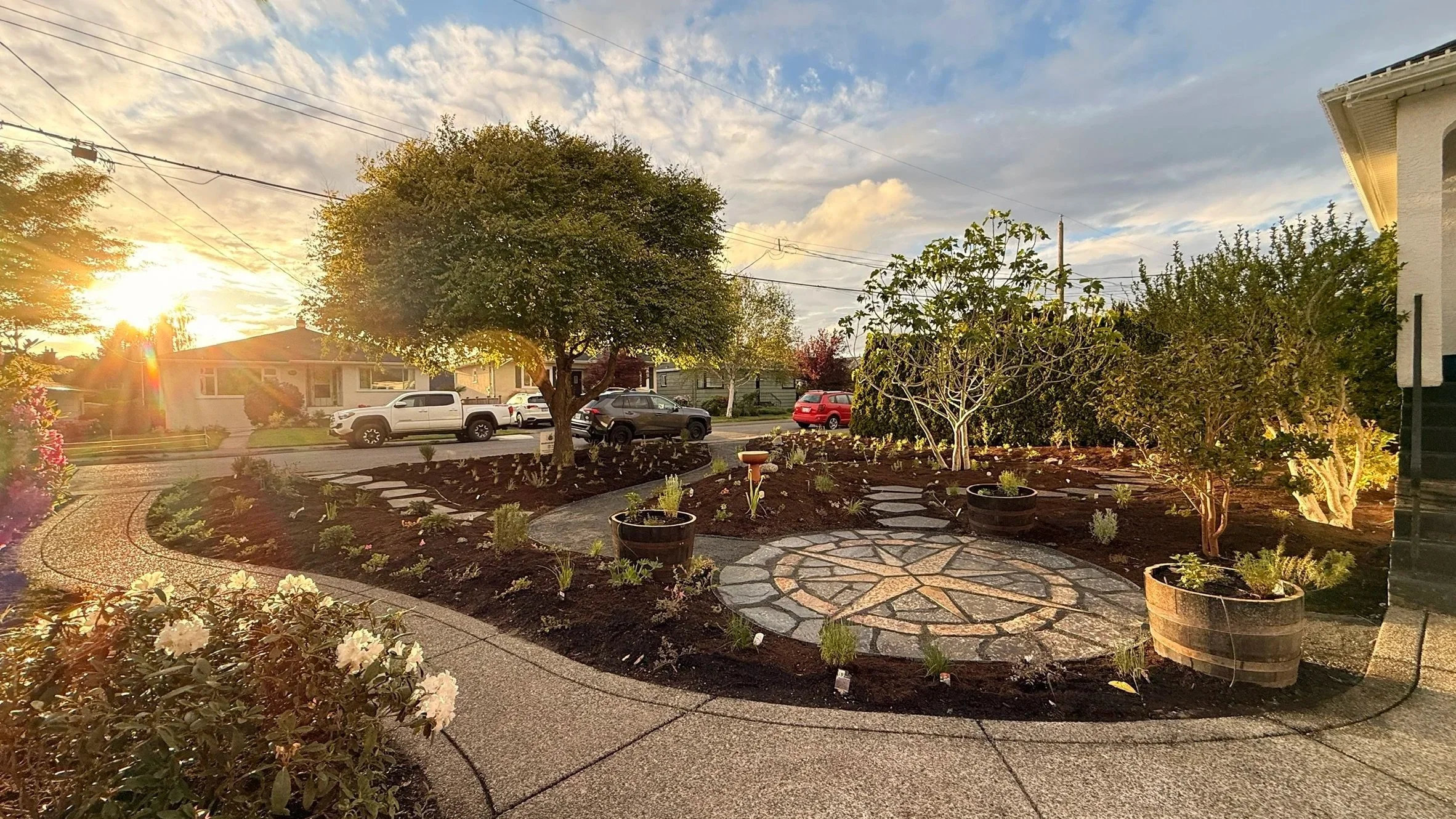
Preparing for Abundance
Why Next Year's Garden Begins This Fall
Every spring, something happens in the garden.
The days lengthen. Nurseries fill. Seed packets come out of drawers, and projects that sat quietly through winter suddenly feel urgent. We start thinking about tomatoes and fruit trees, irrigation lines and pathways, pollinator beds and patios: everything we want to grow or change, all at once.
Spring feels like the beginning.
But some of the best gardens I've worked on didn't begin in spring. They began months earlier, in the quiet of late summer and fall, when the land offers something spring cannot: the accumulated experience of an entire growing season.
By fall, we already know where the sun lingered too long and where the soil dried too fast. We know what flourished without asking much of us, and what demanded far more than it gave back. We know which corner of the yard we visited every morning with a cup of coffee, and which one we walked past without a second thought.
The garden has been teaching us all along. Fall is simply when we're finally still enough to listen.
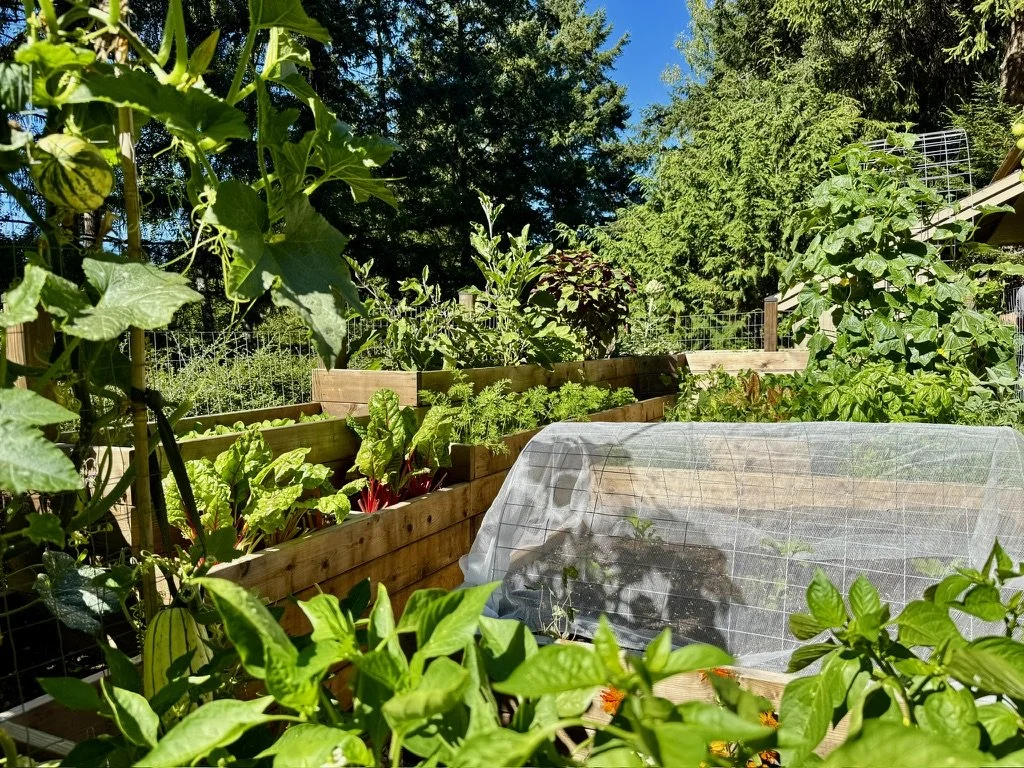
Start by listening
Before deciding what to plant next year, I like to spend time noticing what happened this year, not judging it, just noticing.
Maybe the tomatoes struggled while the raspberries took off without help. Maybe one bed stayed wet long into summer while another baked dry by June. Maybe the deer found something you'd hoped to harvest yourself.
These aren't simply successes and failures. They're information, the same way a wild forest tells you where water collects, where the soil is thin, and where life is most abundant, if you know how to read it.
I'd also encourage you to look past the plants, toward yourself.
Where did you actually sit with your coffee? Which path did your feet wear into the grass, whether or not it was the one on the plan? Where did the kids or grandkids gravitate? Where did the birds gather? Where did the garden feel most alive, and where did it just feel like one more thing asking something of you?
A landscape isn't only a collection of plants. It's a relationship. And like any relationship, it improves once we start truly listening to it, rather than only managing it.
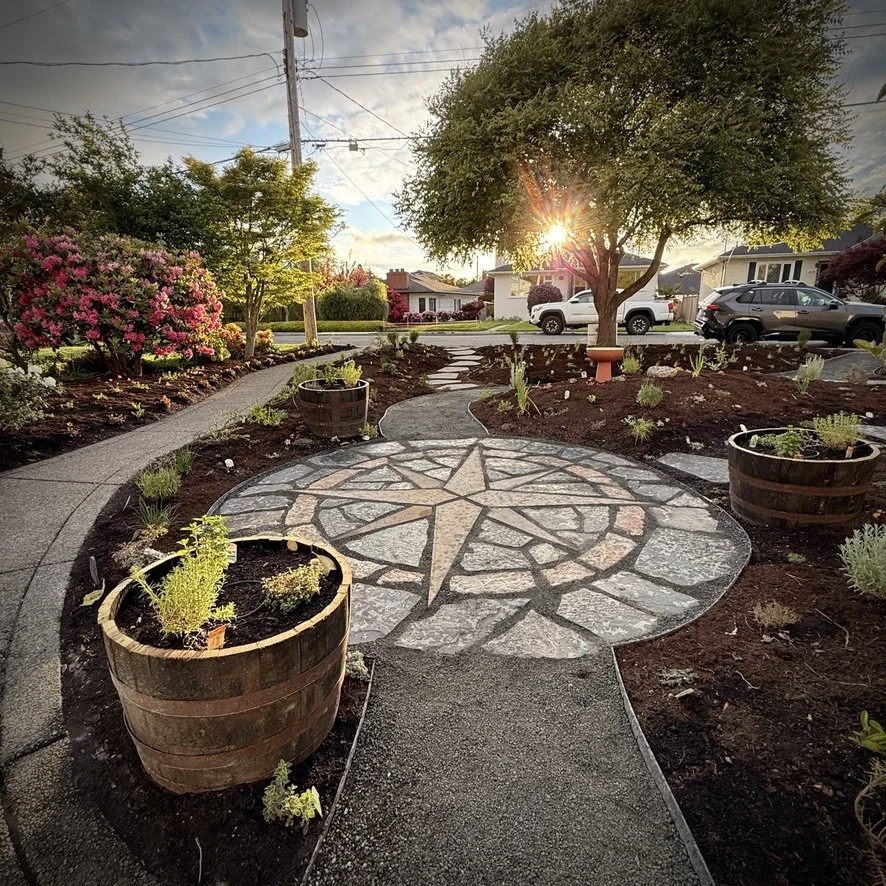
Decide what abundance means to you
Say the words "abundant garden" and most people picture overflowing baskets: tomatoes, berries, apples, herbs by the armful. I love that kind of abundance too.
But I've learned that abundance is rarely only about how much we harvest.
It can be grandchildren picking blueberries straight off the bush. A hummingbird returning, season after season, to a flower it remembers. Herbs within reach of the kitchen door. Soil so alive it holds water through a dry August. A shaded place to sit that wasn't there ten years ago.
Sometimes abundance means having more.
Sometimes it means needing less: less watering, less weeding, less worry, more time actually enjoying the space instead of maintaining it.
That distinction matters, because the goal was never to fit more into a landscape. The goal is a garden that supports the life you actually want to live in it.
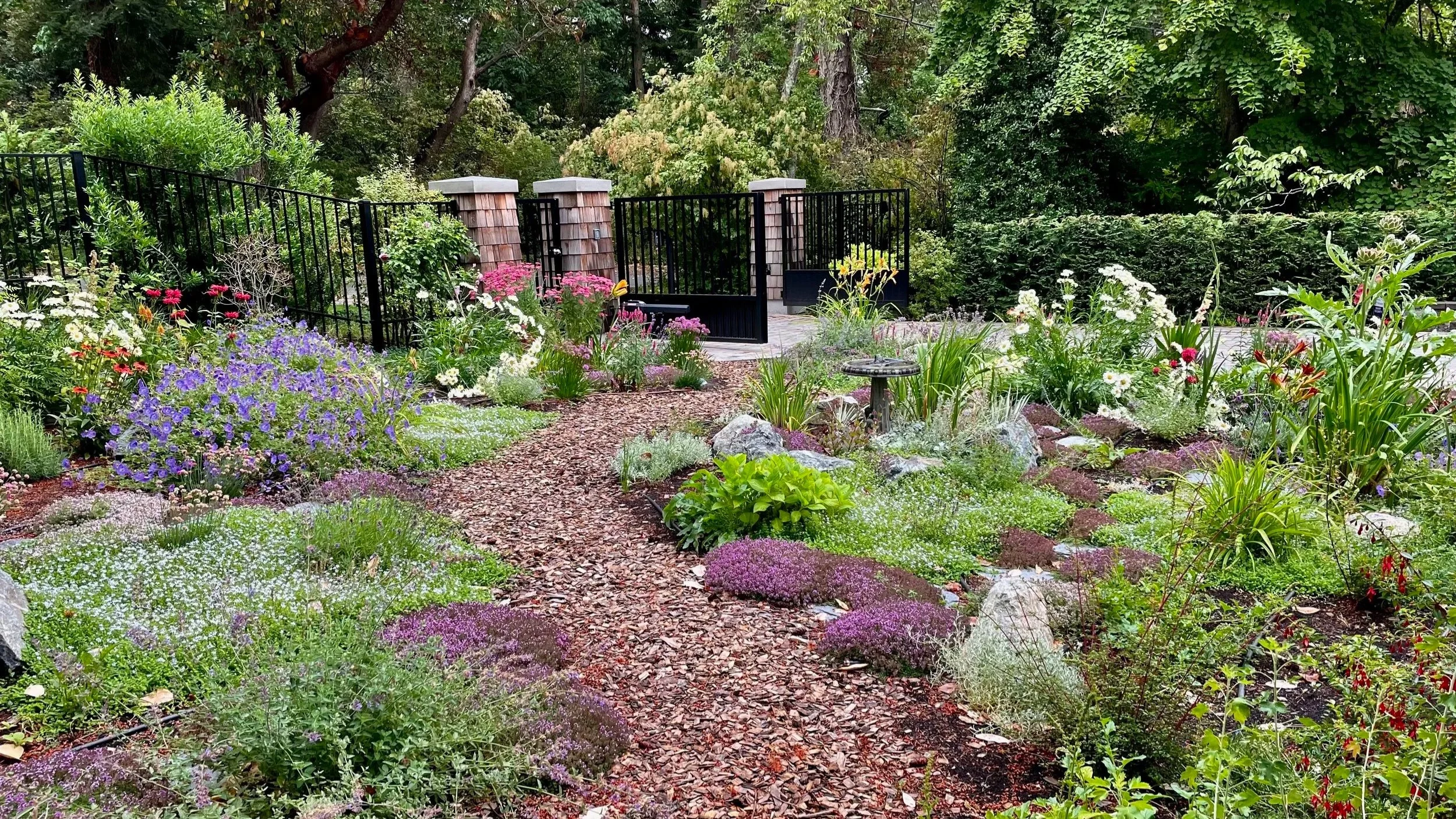
Build abundance from the ground up
When people imagine next year's garden, the first question is usually: what should I plant?
I'd ask something first: what conditions am I creating for anything to thrive here?
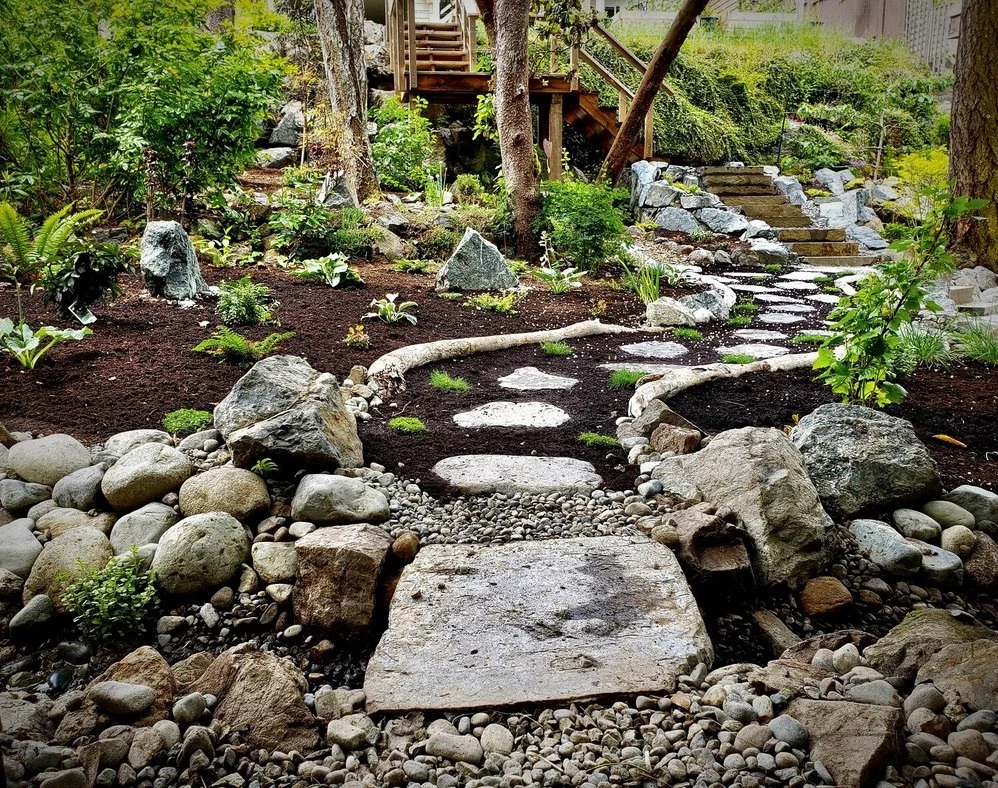
One of the first things we look at is water. Before deciding where paths, garden beds, trees or gathering spaces should go, we want to understand how water moves through the landscape. Where does it enter? Where does it collect? Where does it rush away? Where could it be slowed, spread and allowed to sink into the soil?
As the rains return to Vancouver Island, the land begins to show us things that can be harder to see in summer. Water reveals low points, compacted ground, drainage patterns and places where soil may be washing away.
From there, we can think about access: how people naturally enter, move through and use the landscape. Then we can begin locating the structures of the garden around those patterns, from pathways and gathering spaces to beds, trees and perennial plantings.
Water. Access. Structure.
Healthy soil is part of that foundation too. Fall gives us a chance to return some of what the growing season took. Compost and organic matter feed the life underground. Mulch protects the soil, holds moisture, and slowly builds the ground beneath it into something richer.
Before treating every struggling plant as its own isolated problem, fall gives us an opportunity to understand the larger system it belongs to.
Solve the problem underneath the problem
Gardens tend to repeat themselves.
We water the same dry corner every summer. We weed the same stubborn patch. We replace the same unhappy plant in the same difficult spot. We mow a stretch of lawn no one actually uses, and walk around a bed because the path was never where people naturally wanted to go.
It's easy to respond to these patterns by working harder at them. I'd rather ask why they keep happening in the first place.
Maybe that dry corner isn't really a planting problem at all. Maybe water is moving through the property differently than we realized. Maybe the stubborn patch would rather be a layered planting than a lawn. Maybe the wet spot isn't a problem to fix, but an invitation to work with water differently, the way a swale along a hillside can slow, spread and sink water into the ground instead of letting it rush away and take soil with it.
Sometimes changing the way water moves through a landscape changes everything that comes after it.
Good design doesn't remove the work of tending a living system. Gardens are alive, and living things ask for care. But it can make that care meaningful instead of endless. The goal isn't to force a landscape into behaving. It's to create the conditions where it can begin carrying more of its own momentum, in right relationship with the people who tend it.
Plant for years, not only seasons
There's a particular joy in an annual vegetable garden. Few things compare to a tomato still warm from the sun. I still plant them every year, and I hope you do too.
But some of the most meaningful choices in a landscape unfold on a much longer timeline.
Once we understand the larger patterns of a site, we can begin placing trees and perennial plants where they have a chance to truly thrive.
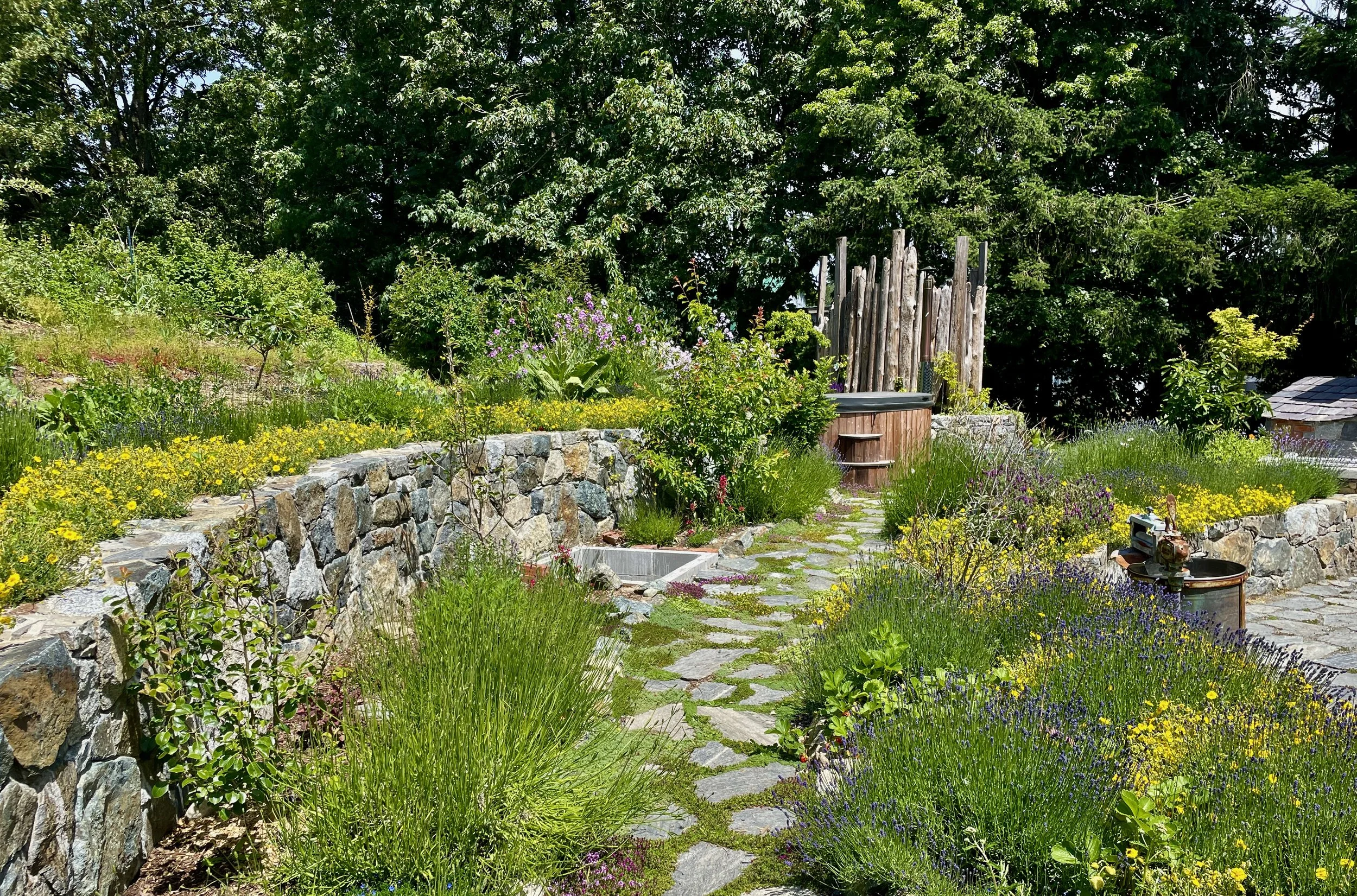
A fruit tree planted this fall may still be feeding someone's grandchildren. Berry bushes become more generous every year they're left to establish. Perennial herbs and vegetables return on their own each spring. Native plants and flowers can support pollinators for generations. Trees eventually cast shade where there was none. And soil, given years of roots, fungi and fallen leaves, slowly becomes something richer than we could ever build in a single season.
This changes the relationship. Instead of rebuilding the whole garden every spring, you begin tending something that's already becoming more of itself, year after year: a system settling in, deepening, and continuing to function long after the installation crew has gone home.
That's the part of this work I find most beautiful: a well-designed edible landscape doesn't decline with age. It matures into something better than what we planted.
Fall is for foundations. Winter is for imagination.
Not everything needs to happen this fall.
One of the easiest ways to create unnecessary cost and unnecessary work is to build before we understand what we're actually building toward.
Fall is a good season for observing the landscape and understanding its foundations. Watch the returning rains. Notice how water moves. Pay attention to how you move through the property and where the garden is asking for change. Feed and protect the soil. Address drainage, erosion or maintenance issues that have been revealing themselves through the season.
And where the larger patterns are already understood, fall can also be an excellent time to establish trees and perennial plants.
Winter offers something just as valuable: time to imagine. A property can be measured and mapped. Ideas can be turned over slowly. Plant communities can be considered as communities, not just a list of species. Budgets can be understood, and a large project can be broken into phases that actually make sense.
Then spring becomes something closer to execution than panic. You're not standing in a nursery aisle guessing. You already know where you're going.
You don't have to do everything at once
There's a common misconception that a property needs to be transformed all in one go. It doesn't, and usually, it shouldn't be.
Some of the landscapes I'm proudest of came together in layers, over years.
The important thing is that those layers follow a larger understanding of the land. Water comes first. Then access. Then the structures and living systems that grow from those decisions.
That doesn't mean every property needs to be built in exactly that order, or that nothing can happen until everything is figured out. It means we try not to make an early decision that creates a problem we'll have to solve later.
A first phase might slow and hold water, improve drainage or begin rebuilding soil. Another might establish pathways, trees or gathering spaces. Over time, berries, herbs, perennial vegetables, flowers and other layers fill in around that framework.
A landscape can evolve alongside the people living in it. What matters isn't finishing everything right away. It's making each step support what comes next.
What are you preparing for?
As this growing season winds down, spend some time in your garden without a list of jobs in hand.
Walk it slowly. Notice where things flourished and where they struggled. Notice what happens when it rains. Where does the water come from? Where does it go? Where does it linger? Notice the paths you actually take through the landscape, the places you keep wanting to linger, and the places you avoid.
Think about what you ate, what you shared, what wildlife showed up, and what quietly asked more of you than you wanted to give.
Then ask:
What would I love more of next year? What would I love less of? What would make this garden easier to live with? What would bring me outside more often? And, this is the one I come back to most, what could I plant today that someone might still be harvesting twenty years from now?
You don't need to answer all of it this fall. You only need to start paying attention.
Because next year's harvest doesn't begin when we plant in spring.
It begins the moment we decide what we're preparing for.
Ready to prepare for abundance?
If this year's garden has you thinking about what could come next, we'd love to hear about it. Our process begins with a relaxed, 20-minute conversation about your space: what you've noticed, what you'd love more of, and where you hope to take things from here.
You don't need a finished plan. Curiosity is enough.