Uprooted Farm: A Forest Garden Farm
When I first walked the land at what would become Uprooted Farm, I could immediately see its potential.
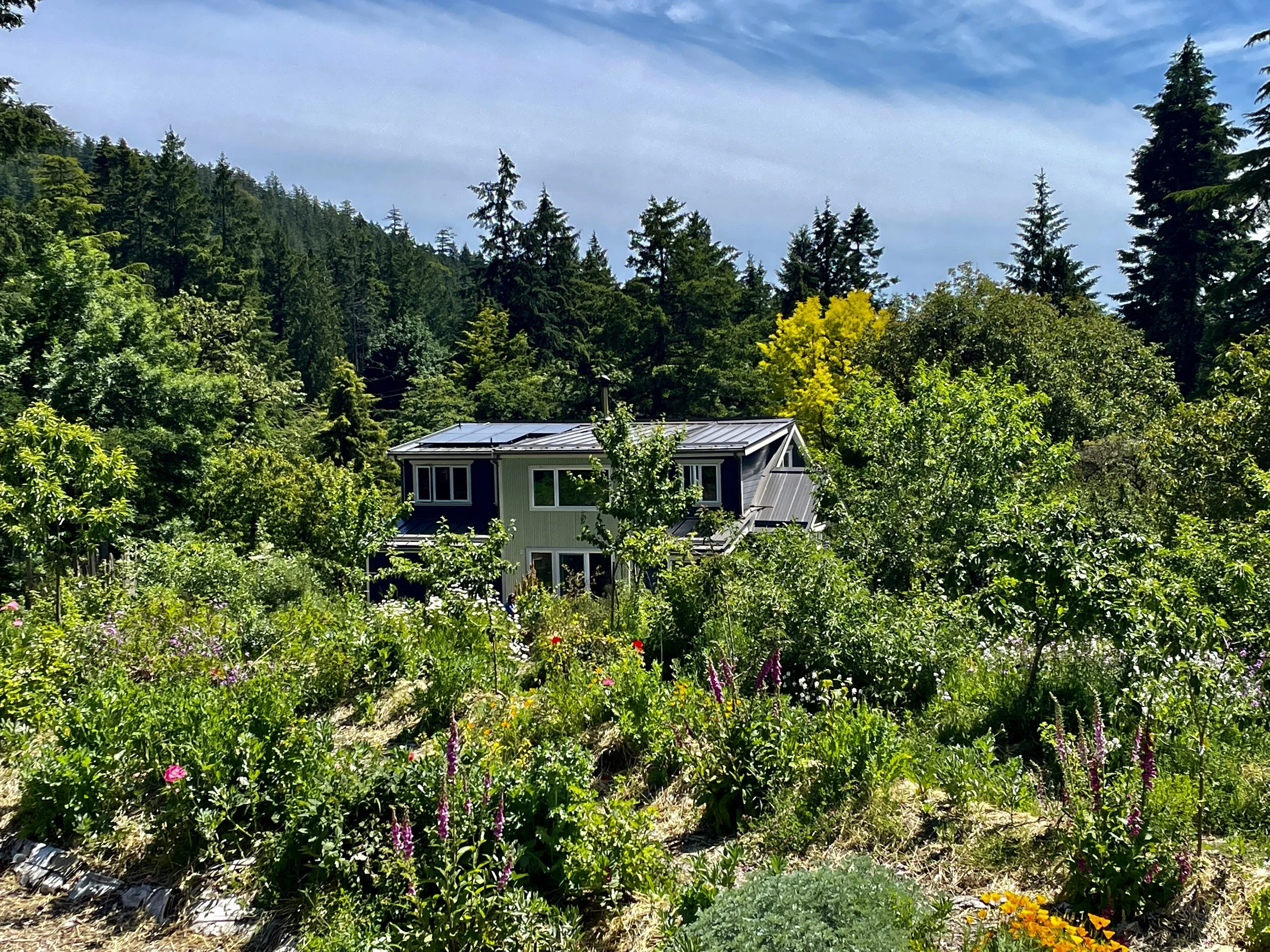
A grand south-facing slope. Mature trees around the edges. An old pond. A beautiful vegetable garden. Simon and Alex had already poured enormous care into the property, and there was a palpable sense of possibility.
But looking more closely revealed significant challenges.
Much of the property's valuable topsoil had historically been removed and sold to Butchart Gardens, leaving heavy clay beneath. The same sun and water that offered such abundance were also taking a toll through summer drought and winter erosion. The broad hillside captured an enormous quantity of rainfall, but much of it rushed downslope, carrying soil and nutrients with it.
The opportunity was immense, but the land demanded respect.
Water is a humbling and powerful force. Before thinking about where everything would go, we needed to understand how water moved through this place and how we could work with it.
Just as important were the people already caring for the land. Simon and Alex brought curiosity, passion and reverence to the project. From the beginning, it was clear that this would not be a landscape designed for them and handed over at completion.
It would be something we would grow together.
Water First
Water became the organizing framework for the landscape.
We commissioned aerial mapping and contour data and brought additional water-management expertise into the project to better understand the movement of rainfall across the property.
From that work emerged a network of swales, berms, rain gardens and passive water-harvesting systems designed to slow, spread and sink water into the landscape.
Six large berms now follow the contours of the hillside. Between them, excavated swales interrupt the downhill movement of water, giving it time to infiltrate the soil rather than carrying fertility away.
But these were never simply drainage features.
They became part of the structure of the landscape itself, shaping pathways, planting areas and the large-scale food forest that would follow.
The swales were filled with alder woodchips and inoculated with fungi. Over time, that initial intervention has developed into an extensive mycelial network beneath the food forest, helping move water and nutrients through the soil.
Above ground, what we see is extraordinary plant growth.
Below ground is much of the reason why.
A Forest Inspired by Forests
A food forest is not simply an orchard with more plants.
It asks us to look at how forests actually work.
Wild forests harvest and store water. Fungi and plant roots form relationships beneath the soil. Pioneer species build fertility. Fallen organic matter becomes future soil. Different layers of vegetation occupy different niches, and some of the greatest diversity and abundance occurs along the edges.
Food forestry takes inspiration from these patterns and asks how we might participate in them while growing food.
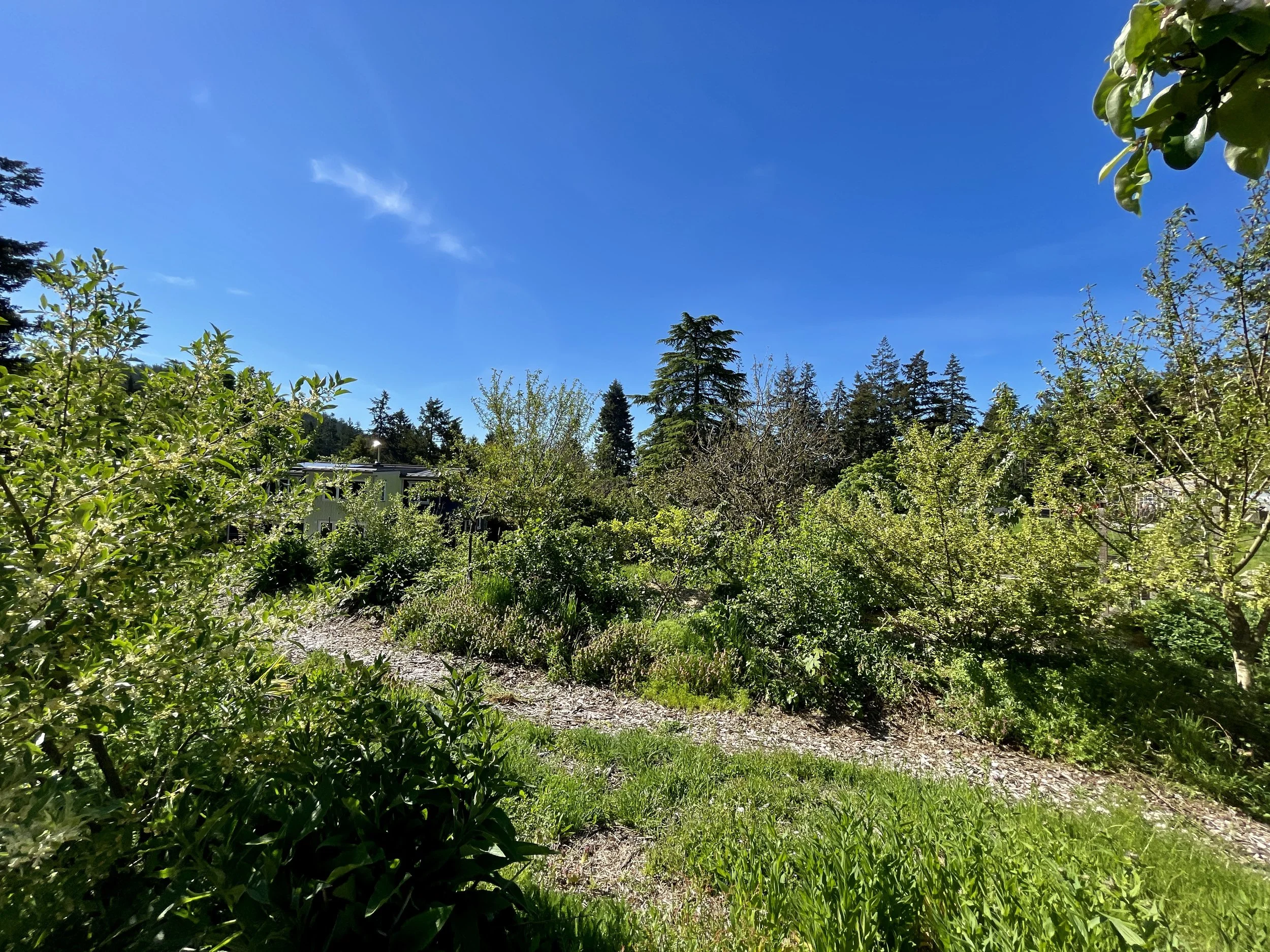
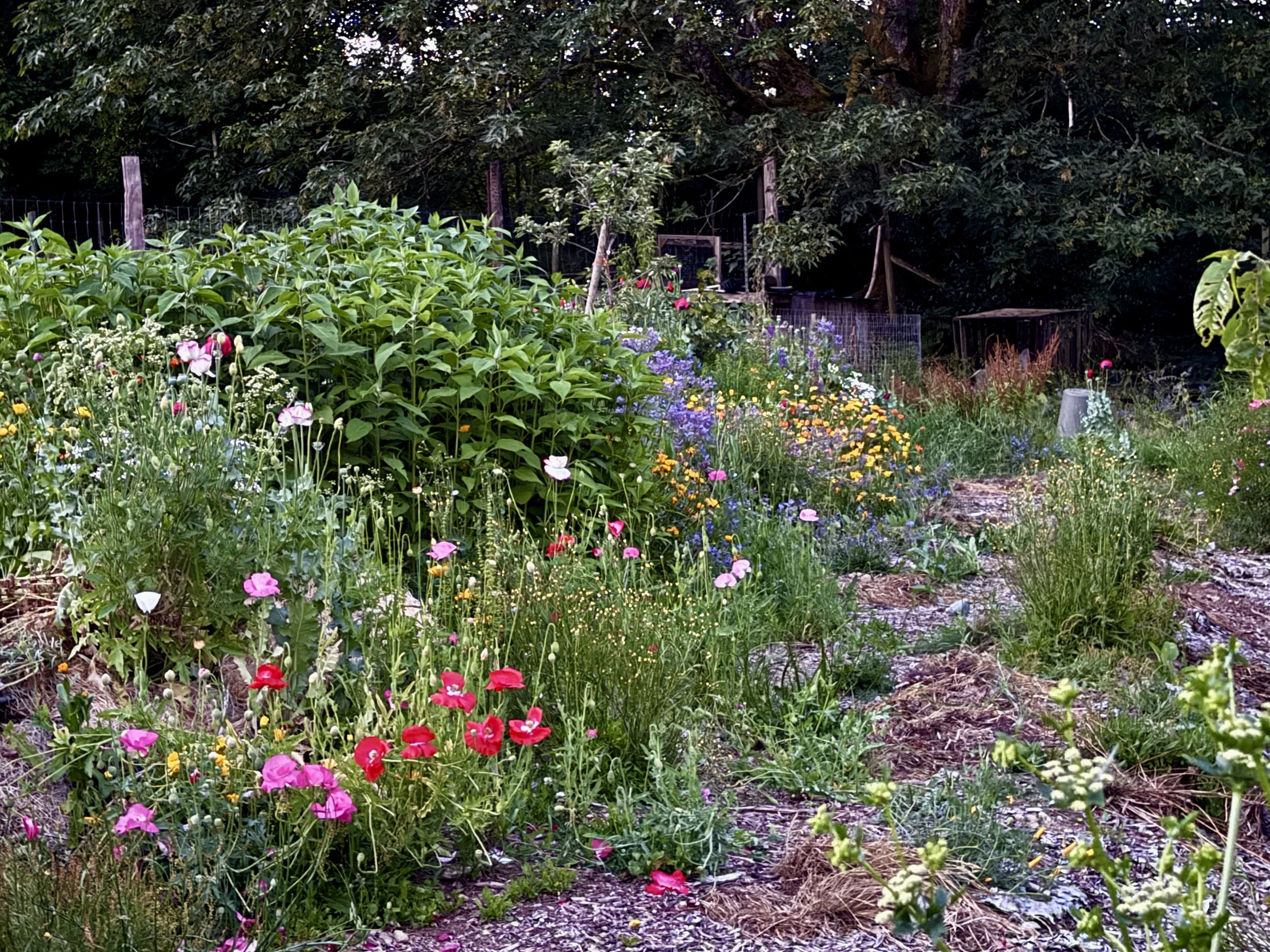
Across Uprooted, fruit and nut trees mingle with berries, perennial vegetables, herbs, flowers, nitrogen-fixing plants and other ecological support species.
Some plants are primarily there to feed people. Others feed pollinators, build soil, accumulate nutrients, provide habitat or support neighbouring plants. Many do several things at once.
The goal is not simply production.
It is reciprocity.
Rather than continually extracting from the landscape, we seek to create conditions where caring for the land increases its capacity to care for us.
One of my mentors, Richard Walker, describes food forestry as “Gardening for 1,000 Years.”
Uprooted has given us an opportunity to explore what that longer view can mean.
A Landscape That Evolves
Several years in, the food forest has grown beyond what any of us expected.
There is an almost magical alchemy between light, water and soil here. The abundant plants are the most visible expression of processes that have been developing quietly for years.
Trees are creating new layers of shade. Organic matter is becoming soil. Fungal networks are spreading beneath the surface. Plants are filling niches and creating new ones. Wildlife moves through the landscape. Morel mushrooms have even begun appearing from alder-chip pathways where nobody planted them.
Not everything has worked exactly as imagined.
And that is part of the design.
Some plants have flourished. Others have struggled. New opportunities have emerged through observation. Simon and Alex continue to experiment, respond and adapt as the landscape reveals what it wants to become.
A living landscape is never really finished.
It grows, surprises, teaches and changes alongside the people tending it.
Designed for Life
Food production was only part of the vision.
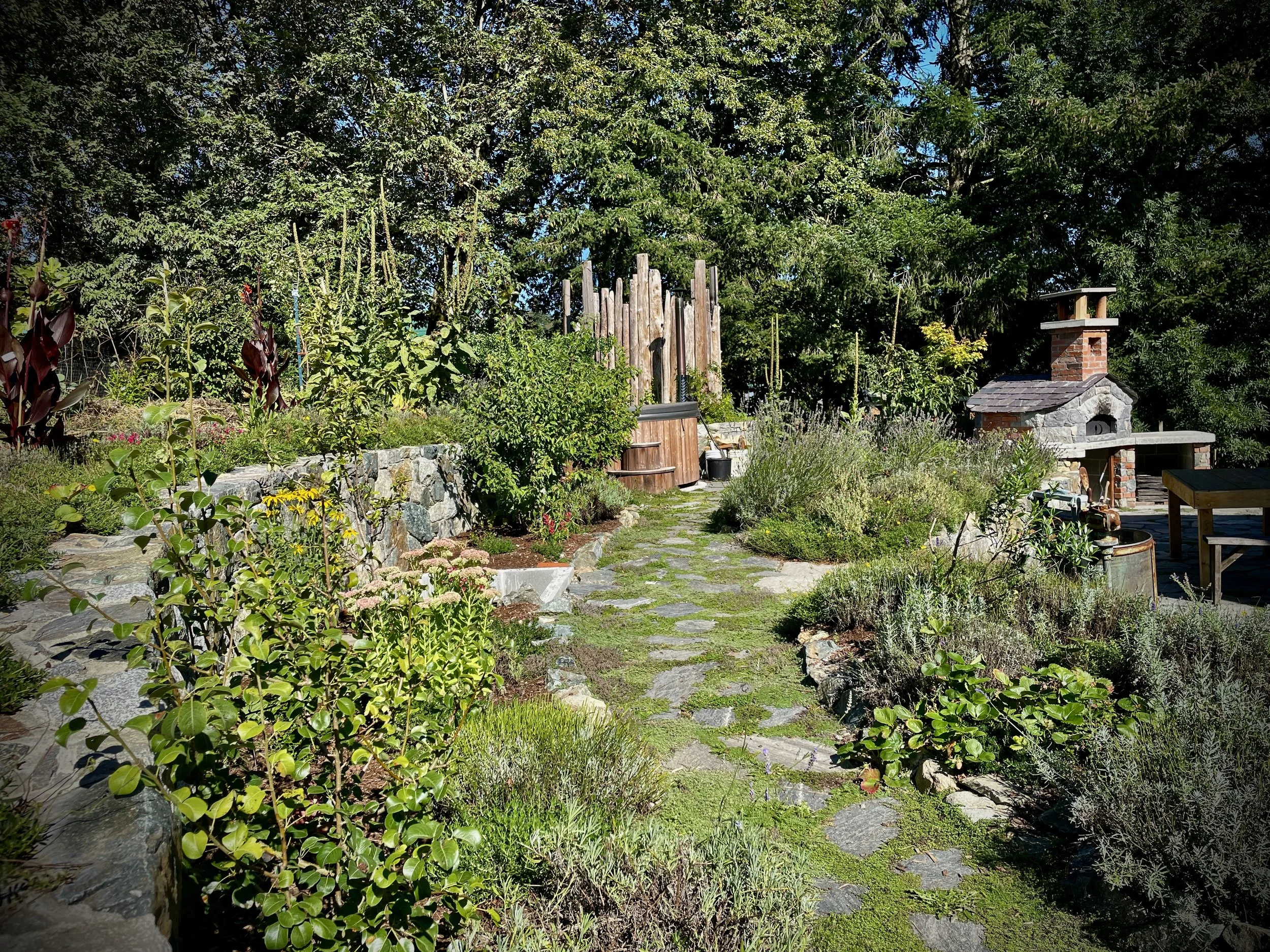
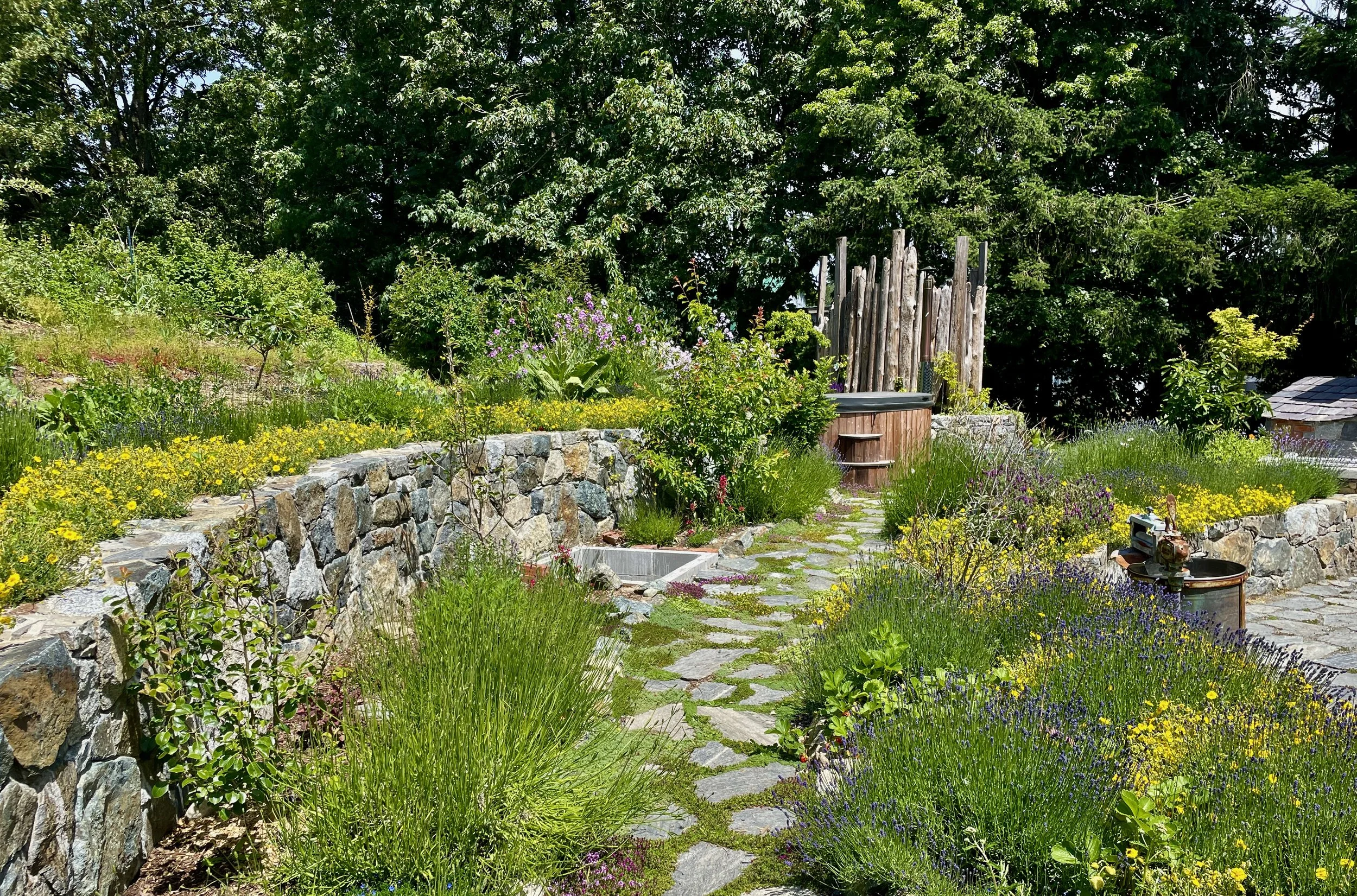
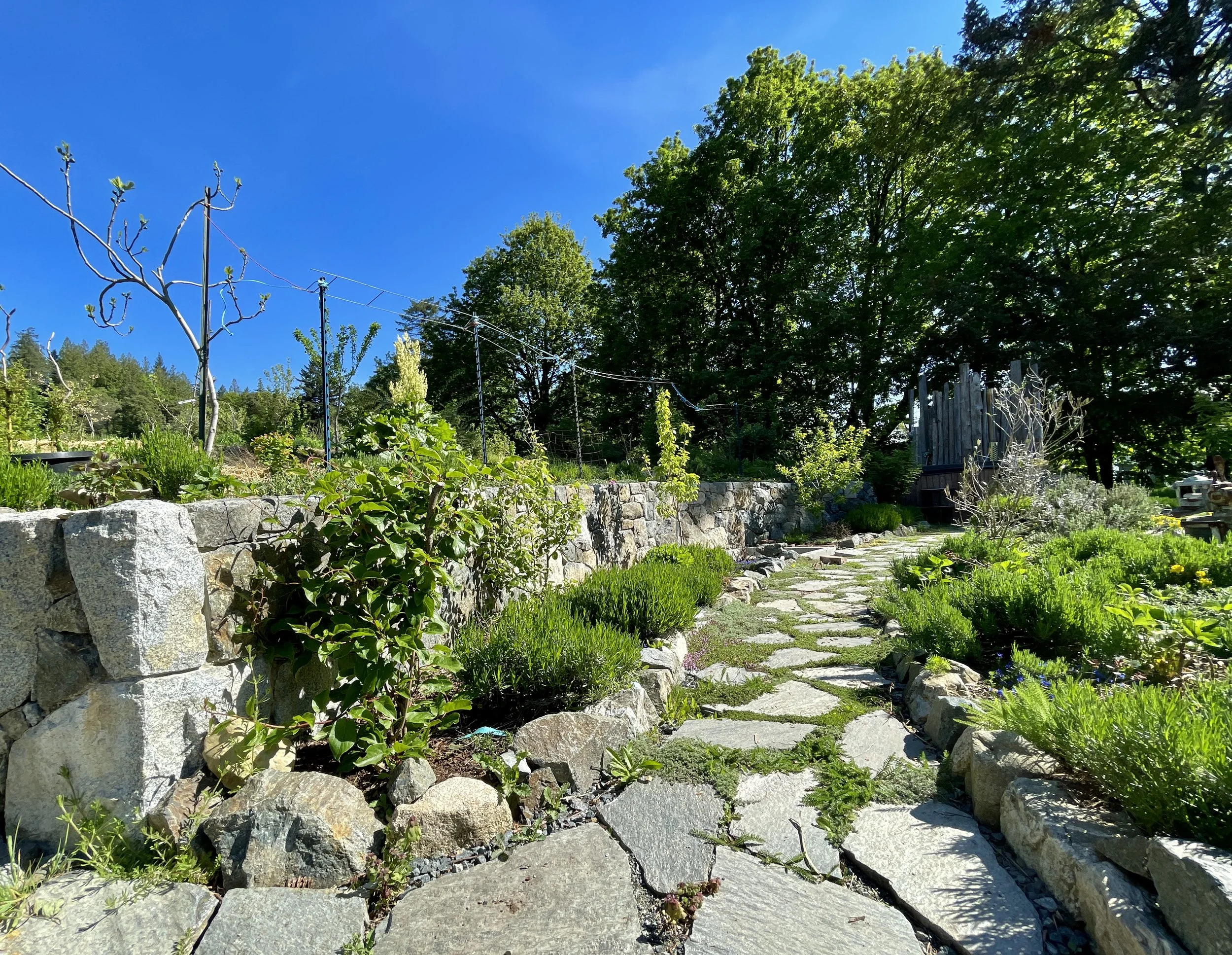
Closer to the home, the productive landscape transitions into spaces for cooking, bathing, resting, eating and gathering. Working collaboratively with Melissa Baron Land Design and other specialists, the project developed to include stone terraces, an outdoor kitchen, flagstone patio, hot tub, outdoor shower, retaining walls and gathering spaces.
Paths invite people into the landscape rather than simply moving them around it.
The farm has also included chickens, ducks, pigs, sheep, goats and other animals, adding another layer of relationship between land, fertility, food and daily life.
And throughout its development, Uprooted has been deeply collaborative.
Simon and Alex have remained active participants in building, planting, experimenting with and caring for the landscape. ELD has helped guide the evolving design, coordinate specialists and trades, lay systems out in the field, and bring others into the process through workshops and collaborative builds.
That participation matters.
The intention was never to create a pristine landscape that required its owners to preserve our original vision.
It was to help establish a living framework that Simon and Alex could continue making their own.
From the Garden to the Table
Perhaps one of the most beautiful expressions of what Uprooted has become happens around the table.
ELD later connected Simon and Alex with Tom Kral of Nature's Chef, beginning a relationship that has grown into long-table dinners at the farm.
Food for these meals comes from the property itself. Ingredients can be grown, harvested, preserved and fermented across the seasons before eventually meeting one another on the plate.
Guests have an opportunity to experience the landscape before gathering together to eat from it.
For us, that closes an important circle.
Water captured on the hillside supports soil. Soil supports plants. Plants feed animals and people. People tend the landscape. And eventually that abundance returns to a table surrounded by the place that produced it.
Food becomes more than a product of the landscape.
It becomes a way of gathering around it.
The Thousand-Year Garden
Uprooted Farm recently became part of a larger story in Edible Vancouver Island.
The Thousand-Year Garden explores food forestry, regeneration and what it might mean to tend landscapes with generations, rather than simply seasons, in mind.
Read The Thousand-Year Garden in Edible Vancouver Island
Years after first walking that hillside, what strikes me most is not that we transformed a damaged landscape into some predetermined idea of what it should be.
It is what became possible when people began paying attention to the relationships already present there.
Between water and contour.
Fungi and roots.
Plants and animals.
Food and culture.
People and place.
Uprooted continues to be cultivated, experimented with, shared and enjoyed. It produces food and habitat, but also learning, gatherings, meals, relationships and new possibilities.
There is enormous potential beneath our feet if we have the courage to imagine what could be there, and the care to listen deeply to what is already there.
If we care for the land, it has an extraordinary capacity to care for us in return.